

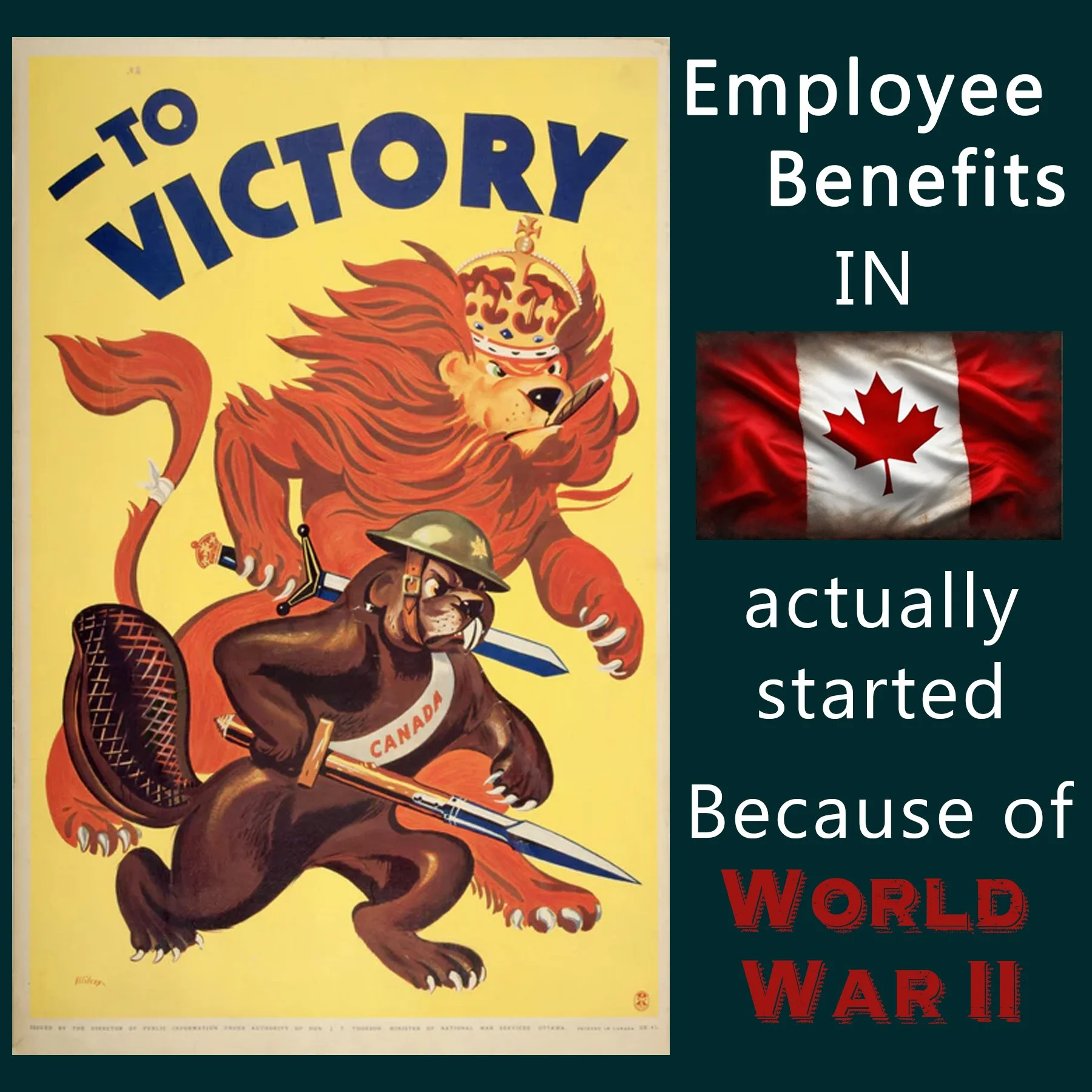
Group benefits are now considered a standard part of compensation in Canada. Health coverage, dental plans, disability protection, and other benefits are often expected by employees and seen as essential tools for employers.
But few people realize that group benefits in Canada were not originally created as perks. They emerged from a practical challenge during one of the most difficult periods in modern history: the Second World War.
Wartime Wage Controls: The Beginning of Group Benefits
During World War II, the Canadian federal government introduced strict wage and price controls. These measures were designed to stabilize the economy and prevent inflation as the country dealt with wartime shortages and rapidly shifting economic demands.
For employers, this created a significant challenge. Wage increases were heavily restricted, which meant businesses could no longer compete for workers simply by offering higher pay.
At the same time, labour was in extremely high demand. Many industries supporting the war effort needed skilled and dependable workers, but they had limited tools available to attract them.
Employers needed another way to stand out.
Unable to raise wages, many companies began offering non-wage forms of compensation. These early benefits often included health coverage and other protections designed to support employees and their families.
This marked the beginning of what we now know as group benefits in Canada.
Post-War Growth: Benefits Become a Business Strategy
After the war ended, Canada entered a period of strong economic growth. Businesses expanded rapidly, new industries developed, and companies needed talented workers to support that growth.
Employers discovered something important during the wartime years: benefits worked.
Offering health and dental coverage became a powerful tool for attracting skilled employees. In many cases, employers were offering these benefits even before universal healthcare systems were fully developed.
Benefits helped organizations attract and retain key roles such as:
Skilled tradespeople
Experienced supervisors
Technical specialists
Professional staff
Leadership positions needed to guide growth
Companies recognized that compensation was not just about salary. A well-structured benefits plan helped employees feel supported and gave businesses a competitive advantage when recruiting talent.
History Repeats: Wage Controls Return in the 1970s
The importance of benefits was reinforced again in the 1970s when Canada faced another period of economic instability. Rising inflation led the federal government to introduce wage and price controls once more.
Just like during the Second World War, employers were again limited in their ability to compete through salary increases.
And once again, many businesses turned to benefits.
Group benefits became one of the few tools employers could use to remain competitive in the labour market while maintaining stability within their workforce.
Why This History Still Matters Today
Although the economic circumstances are different today, the core principle remains the same.
Employers are still competing for talented, reliable people who help businesses grow.
A strong group benefits plan helps organizations:
Attract skilled employees
Retain experienced team members
Support employee health and wellbeing
Strengthen workplace stability
Build long-term organizational growth
In today’s labour market, benefits are no longer just an added extra. They are a strategic investment in a company’s people and its future success.
Building Benefits That Support Your Business
Every business is different, and the right group benefits plan should reflect the needs of both the employer and the employees. Flexible and well-designed benefits can support recruitment, improve retention, and create a stronger workplace culture.
At Jubinville Financial, we work with businesses across British Columbia, Alberta, and Saskatchewan to design group benefits solutions that align with their goals and support their teams; where I listen to your needs and provide the service that you want to grow and be successful.
If you’re reviewing your current benefits plan or considering introducing one for the first time, a thoughtful strategy can make a meaningful difference for your business and your employees.
Because just as history has shown us, the right benefits plan can help attract the people who drive your business forward.

Kristin Jubinville